


Teaching Children to Use a Fork the Montessori Way
There’s nothing quite like the look on a toddler’s face when they finally spear a piece of food with a fork. Teaching this skill can feel messy at first, but it’s one of the most rewarding steps toward toddler self-feeding independence.
In Montessori, learning to eat is about slowing down and helping a child build real, lasting skills. And Maria Montessori’s “Help me do it myself” mindset shapes everything, especially at the table.
With the right setup, Montessori child-sized utensils, and the right timing, children can develop independent eating skills with confidence and joy.
So today, we’ll break down what age children typically start using a fork, how to recognize readiness, and how to support their growth using Montessori practical life eating principles.
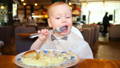
At What Age Should a Child Use a Fork?
So, when should a baby use a fork? Well, the truth is that there's no magic age for it. Like most milestones in early development, it’s less about the number on the calendar and more about the readiness signs your child shows.
That said, we can still answer the question of: when can babies use a fork?
Most babies begin showing interest in using a fork between 12 and 18 months. During this stage, many kids already have experience with spoons, and they’re starting to explore more challenging tools.
Around 18 to 24 months, children typically become more proficient with a fork and can manage firmer foods with increasing confidence.
But when should a toddler be able to use a fork and spoon regularly?
By two years old, most children are using both tools with some degree of independence, though some foods still get eaten by hand, and that’s okay.
Most importantly, when should a toddler use a fork?
As soon as they’re interested, able to sit securely, and are starting to experiment with utensils. Montessori encourages us to watch for readiness cues and meet them with tools and environments that allow success, not perfection, just progress.

Understanding Fork Development in a Montessori Context
Forks are all about coordination, problem-solving, and independence. In Montessori, every tool is an opportunity to build a skill. And when it comes to self-feeding, learning to use a fork touches almost every area of development.
Why Fork Skills Matter for Development
At first glance, piercing food may seem simple. But it requires serious coordination. Fine motor control, especially pincer grasp refinement, is a major part of fork grip development.
Fork use also builds bilateral coordination, which allows kiddos to use one hand to stabilize the plate or food while the other hand handles the fork. Add in wrist stability, hand strength, and precise targeting, and you’ve got a full-body skill set packed into one everyday movement.
Also, forks help children understand cause and effect: press down with the fork, and you get a bite of food. It also supports spatial awareness, planning, and problem-solving, especially when foods don’t behave the way they expect.
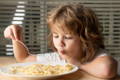
The Montessori Approach to Fork Introduction
Montessori also emphasizes the prepared environment. That means utensils sized to fit small hands, a Montessori weaning table where feet rest flat on the floor, and real plates that don’t slide around.
Instead of spoon-feeding long past readiness, it’s important to let children take the lead. Yes, it’s slower. Yes, it’s messy. But the confidence it builds is real and lasting.
Developmental Readiness Assessment
Before introducing a fork, it helps to step back and observe. Not every child is ready at the same age, and pushing for them to develop independent eating skills too soon can lead to frustration for both of you.
Physical Readiness Indicators
Look for signs like a developing pincer grasp, which is the ability to pick up small items like Cheerios or raisins using the thumb and forefinger. That grasp is key to controlling a fork with intention.
Also, try to notice if your child uses both hands purposefully at the table.
As for the question “when should a toddler use a fork?”, the answer is: when they show the signs and the motivation, not when a chart tells you to.
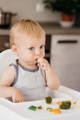
Cognitive and Behavioral Readiness
Fork use also depends on focus and understanding. Is your child able to stay seated and concentrate for 10 minutes during a meal? Do they show clear intent when using a spoon, like aiming for the mouth rather than playing with the tool?
Safety matters too.
Before introducing a real fork, make sure your child responds to simple commands like “stop” or “wait,” and can handle pointed objects without waving or throwing.
When those signs are in place, you’re ready to move forward.
Teaching Proper Fork Technique
Learning how to use a fork is more than just poking food. For a toddler, it's a whole-body coordination challenge; grip, pressure, aim, and timing are all working together.
The Montessori Fork Grip Method
- Whole-hand grasp: Gripping with the palm, often with the thumb pointing toward the tines.
- Transitional grip: Holding the fork more like a crayon, with fingers wrapping the handle.
- Mature grip: Using the thumb and fingers to control movement from the wrist.
- Refined grip: Using finger adjustments for precision and control.

The Four-Step Fork Method
- Step 1: Position (aim): Help your child point the fork down toward the food and line it up with the center. If needed, they can steady the plate or food with their non-dominant hand.
- Step 2: Pierce (action): Encourage them to apply gentle pressure until the tines pierce the food. A soft "push down" cue can help.
- Step 3: Lift (control): Once the food is secure, help them lift the fork straight up and bring it toward their mouth without tilting.
- Step 4: Extract (completion): Show them how to bite the food off the fork gently. Then return the fork to the plate to reset for the next bite.
Common Technique Issues and Solutions
Progressive Skill-Building Activities
Just like walking or talking, learning to use a fork takes time, practice, and the right kind of support. Outside of meals, you can offer playful, pressure-free activities that build the same hand strength, focus, and coordination children need at the table.
Pre-Fork Piercing Activities
Before a toddler can pierce food consistently, they need the muscle control and confidence to use a tool with precision. That kind of control doesn’t start with a fork; it starts with their hands, and it builds slowly.
- Playdough practice: Let your child poke playdough with safe skewers, thick straws, or even blunt toothpicks under supervision. You can make “food” out of playdough and let them “serve” it with toy forks. These small motions build fine motor control without the pressure of eating.
- Poking and piercing games: Try foam blocks with golf tees, large buttons with holes, or even thick felt for threading. These give toddlers repeated opportunities to poke, aim, and build control, no food required.
Want more practical life play ideas? Explore the Montessori kitchen collection for hands-on tools that encourage independent eating skills and utensil confidence.
Mealtime Integration Strategies

Common Challenges
Teaching a child to use a fork isn’t always smooth. One day, your toddler might spear every bite like a pro. Next, they’re flinging peas or refusing utensils altogether. It’s normal. Here’s how to handle the ups and downs with calm and consistency.
Resistance to Fork Use
Issue: Your child prefers using their hands or reverts to the spoon.
Why it happens: Toddlers often fall back on what feels easier or more familiar, especially when hungry or tired.
Montessori approach: Keep offering the fork without pressure. Model its use enthusiastically during family meals. Serve foods that need a fork, like pasta or soft meat chunks, so the fork becomes the natural choice.
And remember, hands are still valid tools. Using fingers helps develop tactile feedback and hand-eye coordination, too.
Frustration with Piercing
Issue: Your child struggles to pierce firmer foods and becomes visibly frustrated.
Why it happens: Their hand strength or coordination might not be there yet.
Montessori approach: Make it easier to succeed. Offer softer, fork-friendly foods (think banana slices or steamed carrots). You can also pre-pierce a few bites to give them a win early in the meal. Confidence is built through small, repeated successes.
Safety Concerns
Issue: Fork is being waved, thrown, or poked at others.
Why it happens: Forks are exciting! Toddlers love testing limits (and physics).
Montessori approach: Set clear, calm boundaries. “Forks are for food. If we’re done using it safely, it stays on the plate.” If unsafe behavior continues, remove the fork for that meal without punishment. Consistency builds understanding.
Advanced Fork Skills Development
Once your child has the basics down (holding a fork, piercing soft foods, and bringing it to their mouth), it’s time to level up. These refinements build stronger hand control, independence, and confidence at the table.
Cutting with the Fork Side
At first, toddlers may simply poke and lift. As coordination improves, you can introduce the idea of using the fork’s edge to press and break apart soft foods like bananas, pancakes, or steamed potatoes.
This supports wrist control and bilateral coordination, using one hand to hold the plate or food while the other manages the fork. It’s also an early introduction to “cutting” without needing a knife.
Multiple Food Management
This is where your toddler starts to problem-solve in real time. They might try spearing two banana pieces at once or figure out how to eat mixed foods like stir fry or pasta with sauce. These small tasks sharpen focus, planning, and control.
You’ll start to see more fluid movement: piercing, lifting, chewing, placing the fork down, and repeating. Each meal becomes a mini-lesson in sequencing and rhythm.
Social Eating Skills
With independence comes the joy of participating in shared meals, not just physically, but socially. Montessori encourages real-life learning, so family meals become a place to model calm behavior, utensil etiquette, and the joy of eating together.
Your toddler will learn to wait their turn, use a napkin, and even share food using their own fork (with help at first). It’s not about perfection. It’s about helping them feel like a capable member of the table.
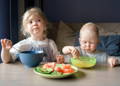
Integration with Broader Montessori Practices
In Montessori, nothing is taught in isolation. Using a fork isn’t just about eating; it’s tied to a whole system of learning that values real-world skills, self-reliance, and respect for the child’s abilities.
Connection to Practical Life
Self-feeding is part of a much larger category in Montessori called practical life. These are the everyday activities that help a child care for themselves and their environment.
By teaching your toddler to use a fork, you’re also preparing them for:
- Setting the table: Let your child help lay out forks, plates, and napkins before meals.
- Washing utensils: After eating, they can carry their fork to the sink and help clean it using a small dish brush.
- Preparing food: Toddlers love helping with mealtime prep. Let them mash bananas, rinse vegetables, or arrange their own plate.
Building Independence

Conclusion

Free Delivery
Over $80

Easy Returns
No questions asked

Unbeatable Warranty
1-year ++ warranty
 Secure CheckoutWorld’s most secure payment method